


 English
 Thai
Phuket Now Showing: X-Men: First Class
 Release Date: June 3, 2011
Studio: 20th Century Fox
Director: Matthew Vaughn
Release Date: June 3, 2011
Studio: 20th Century Fox
Director: Matthew Vaughn
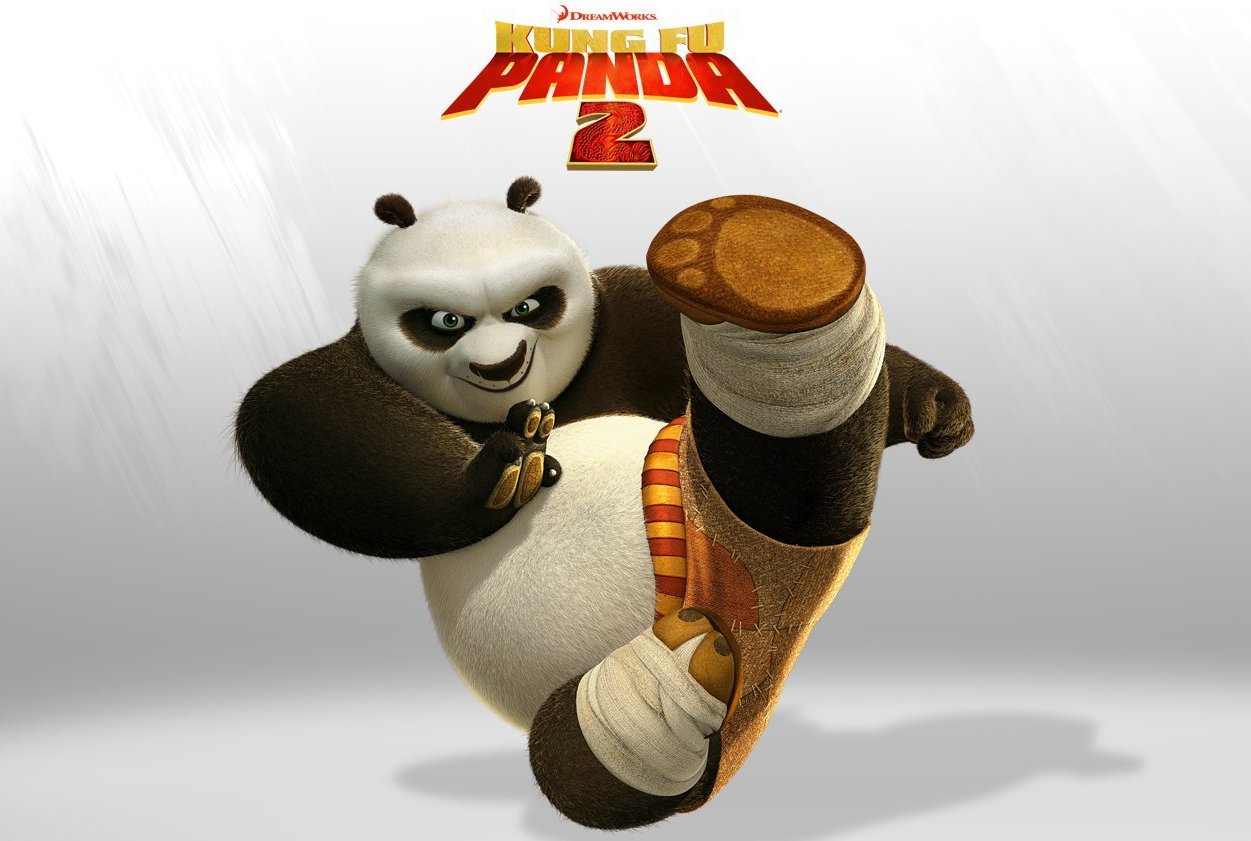 Release Date: May 26, 2011 (3D/2D theaters)
Studio: DreamWorks Animation
Director: Jennifer Yuh Nelson
 Release Date: May 19, 2011 (3D/2D theaters)
Studio: Walt Disney Pictures, Jerry Bruckheimer Films
Director: Rob Marshall
 “Rolling in the Deep” is a song by English singer-songwriter Adele from her second studio album, 21. The song was written by Adele and Paul Epworth and has been described by Adele
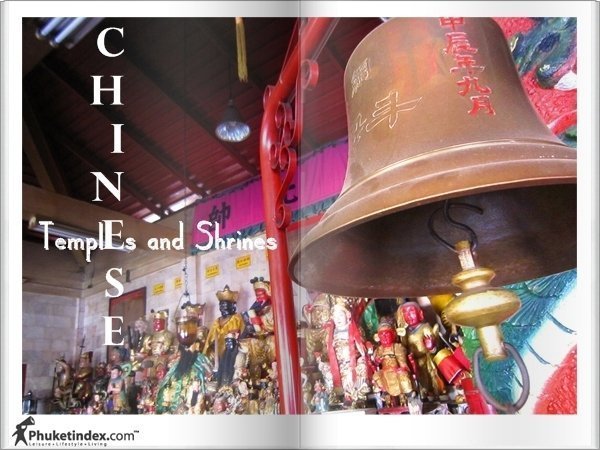
Phuket has a large percentage of Chinese residents who have descended from those who emigrated from southern China a few centuries ago, to work in the tin mine business as coolies. These people brought with them their rich culture and traditions, and these influences are evident in the number of Chinese temples and shrines found around the island, and more markedly so in the annual vegetarian festival. Their religion was, and still is, predominantly a mixture of Buddhism incorporating Chinese and Taoist gods. Red and yellow are the main colours used in the temples and shrines. Animals such as dragons, lions and monkeys are also important symbols which are clearly visible.
Jui Tui Chinese Temple – Tao Bo Keng – 100 years old
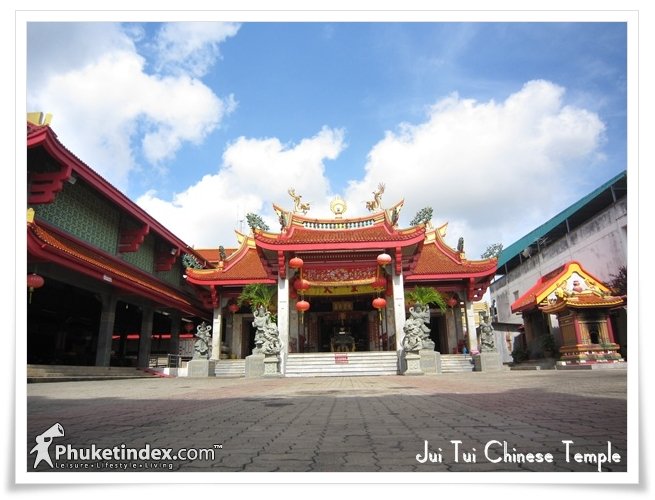
The Jui Tui Temple, previously located in Soi Romanee, was moved to its current location after a fire destroyed the original many years ago. The temple is one of the most important in Phuket and plays a pivotal part in the famous annual Phuket vegetarian festival. The grounds are quite impressive and display photos of the temple dating back to 1911 when the temple was just a simple single construction, without side walls or additional buildings. The main building itself has been through a number of renovations, resulting in a beautiful exterior and interior, with three large altars ful of statues of Chinese Gods. The meaning of Jui Tui is that Jui refers to water and Tui refers to mortar. Previously, the front of the shrine was a wide canal with plenty of water. Then villagers helped to build a windmill to use for the power required to crush rice after it had been harvested.
Tao Boo Keng – Bang Niew Shrine – 107 years old
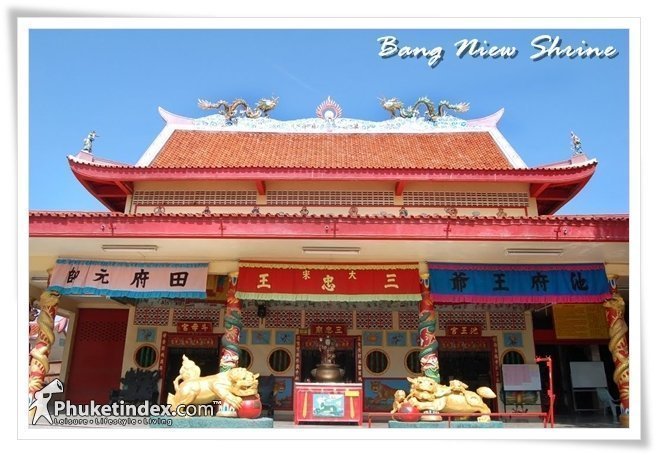
The Bang Niew Shrine or Tao bang Keng was built in 1904. At that time there was a shrine on the Soi and the Goddess Pra Tien Hoo Nguan Soy (Lao Len) was brought there to make merit by the Kang Chai Hee Chinese opera. Due to a fire at the original site, a group of villagers took Pra Tien Hoo Nguan Soy to be installed at the Bang Niew Shrine and assisted in rebuilding the shrine using wood with a thatch roof. 4 to 5 years later, once again, a fire occurred at the site of the shrine. Villagers then took Pra Tien Hoo Nguan Soy and placed her on land opposite the fire damaged site. Bang Niew villagers were greatly faithful. They made merit and now hold the vegetarian festival every year in remembrance. Unfortunately, due to growing numbers of visitors to the festival, this sire became too narrow. A committee, led by Khun Khunlert Phokharak, helped to renovate the shrine and villagers donated money towards buying 6 rai of land so the shrine could be made larger. In 1957, 5 administrative committees established the Thep Rasi Foundation. This shrine has now been developed into a big concrete building complete with a zinc roof, and is now a comfortable size for the number of people who also want to visit and make merit.
Cherng Talay Shrine – 110 years old
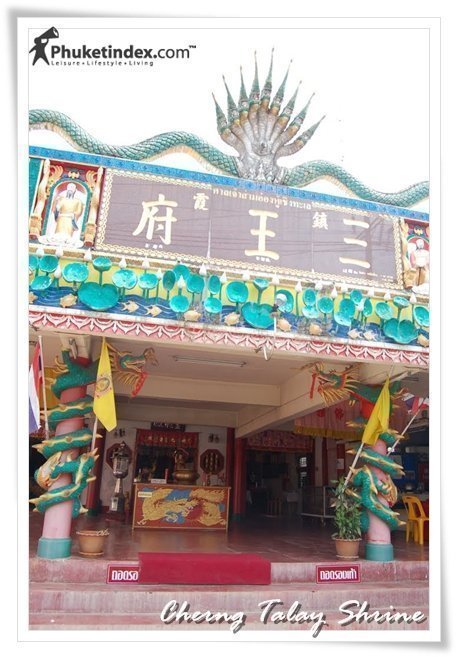
Ban Chern Talay, also known as Tin Le, has a large Chinese community. This is due to the fact that many Chinese came to the area seeking their fortunes in the tin mining industry. Due to the large numbers of Chinese in the area, there were many discussions about bringing Buddha images to Cherng Talay, from China, so that the community had some where to go to pay their respects to Buddha. Pea Ju Pai Tak, whose career was not in mining, but as the village barber, was often involved in the discussions. He soon accepted the challenge of returning to China, in fact to his home town, to seek out the Buddha images to bring back to the community in Cherng Talay. In 1901 Pae Ju Pai Tak took his trip to his hometown. When he returned he brought with him three wooden carvings of Chinese Buddha’s. Amongst the three carvings was one image that included the name “Joo”. A local community member named Pae Joo Jew Tee donated land on which to build the shrine, as the name of the Buddha contained a name which was the same as his. Therefore, the shrine was established. The committee persuaded people from the local community to construct the shrine building on the land which was donated. The shrine was built using wooden poles and was covered with a thatch roof and named the Abbey of Kim Hui Tian. The president Buddha image was Sam Ong Hoo, which referred to the God of the three holy Buddha image. There is also a legend told that there were more than 160 relatives who took part in looking after the abbey. Nowadays, there are two Buddhaimages of Sam Ong Hoo, one at the Cherng Talay shrine and another (Pra Joo Hoo) installed at Khun Charn Sermkitsri because of a request by Pra Joo Hoo himself. Lai Too Tao Boo Keng –
Kathu Shrine – 186 years old
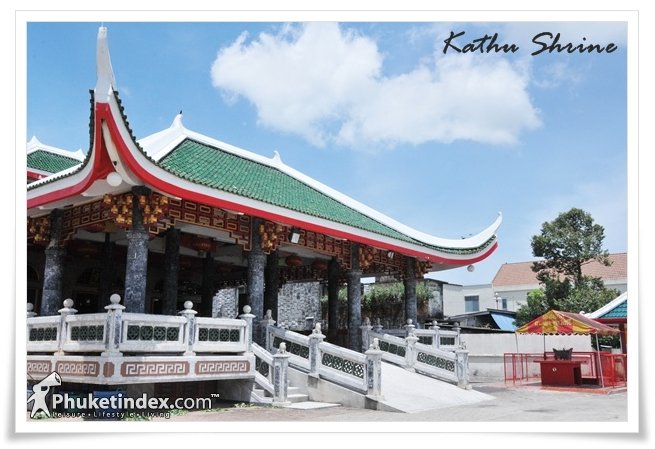
After a Chinese opera come to perform at Baan Kathu, several performers had a serious illness. The performers remembered they had forgotten to make their vegetarian ritual, which they performed continually every year. They consulted each other and eventually agreed if they wanted to get well from the epidemic they should hold the vegetarian ritual at Baan Kathu. After performing the ritual the epidemic disappeared. They were very faithful to the Kathu villagers and the villagers participated in this ritual alongside the Chinese opera. Nobody knew about or was an expert in this ceremony, they could only respect and ask for pardon. There was an expert who lived in the Kung Sai County who saw the villagers performing the vegetarian ritual. He advised them that this wasn’t correct and was not the same as the original ritual held at “Chai Tung” (shrine in Kung Sai), so he volunteered to go back to light joss sticks and constitute the ceremony. In the night time, the expert came back from China by sail boat at Bang Liew (Bang Niew at present time)and sent news to the Kathu villagers that he had already arrived and told all committees in this ceremony to come to pick him up the next day (8th day of the ninth lunar month). He had brought with him joss stick powder, which was ignited continuously. He also brought chants from scriptures with Tao Bo Keng labels for attaching on the Chai Tung shrine.
Put jaw Chinese Temple – Over 200 years old
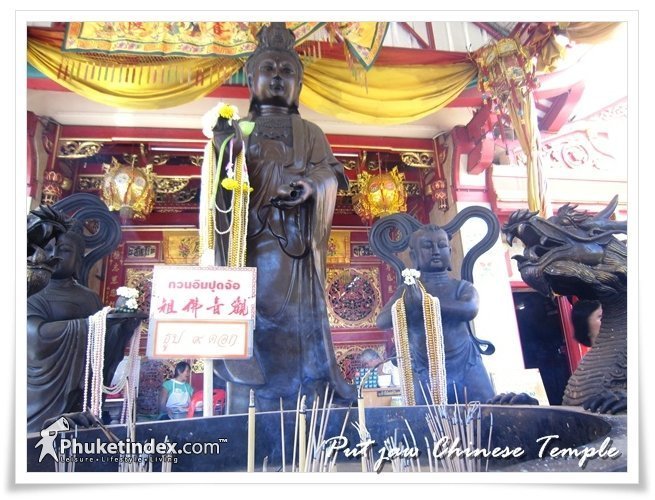
The Put Jaw Chinese Taoist Temple was built over 200 years ago and is the oldest of its kind in Phuket. It is dedicated to Phra Mae Koan-Im (Kuan Yin), the Goddess of Mercy. The main hall holds statues of the goddess and her attendants. The temple is situated on Ranong Road in Phuket Town. In 1908, following a serious fire, it underwent major renovations. May locals come here to seek help when they are suffering health issues. They shake a box of bamboo sticks until one falls out, they then use the number written on the stick to get a medication prescription from the temple (written only in Chinese) then take it to a Chinese herbalist for the ingredients. Many parents with Chinese heritage come to get names for their newborn babies. It is believed that if properly named their children will have a good and long life.
http://tv.phuketindex.com/the-oldest-chinese-shrines-in-phuket-525.html

Phuket offers stunning views that would make any artist drool, and the best thing about it is that you don’t have to travel too far around the island to enjoy them. Whether it’s to watch a sunset, get a 360-degree view of the south of the island, see great sights from the top of Phuket Town or a glance the acres of sultry greenness, it’s all here, and can be reached in minutes. The only thing required is a car or motorbike.
It all depends on what you want to see, as we are all individual and all have our own ideas of what is a wonderful view. So we have taken some which we think will suit all tastes. Here are some of Phuket’s Top viewpoints for you to check out.
5. Khao Khad @ Panwa

There is a large parking area here along with cafes and shops. There are some quite steep steps to climb, but once you have reached the top the panoramic views of Southern Phuket are stunning.
At the top there is a two-level view tower which provides eight photo maps, in both Thai and English, so this will tell you exactly what you are looking at.
Chalong Bay is to the south, Makham Bay and Cape Panwa are to the east, Phuket Town to the north and in the distance you can see Ko Nakkerd which is the home of the islands famous big Buddha.
4. Rang Hill

This location is very popular with all people. Here, surrounded natural beauty, you will find the statue of Kosimbee na Ranong, the Phuket governor from 100 years ago.
There is an exercise area, which is a popular place for students to get together. There is also a small cafe so you can enjoy some refreshments whilst you are here. A mahogany stairway made of old railway sleepers takes you to a great restaurant called Tunk Ka Cafe. Here you will also get a great view out over Phuket.
Rang Hill is a very shaded area which makes it popular for people taking exercise. There’s plenty of seating both in and out of the shade.
3. Kata View Point

In Thai this viewpoint is known as Kho saam haad, which translated means ‘Hill of the three beaches’. This is due to the fact that the hilltop looks down over Kata Noi, Kata beach and Karon beach, as well as Pu Island, off Kata Yai Beach.
Located on the road between Kata and Rawai, it is quite a popular place which provides car parking spaces, beautiful gardens, eateries and two large Salas where you can sit, relax and enjoy the north facing views.
The road is fairly quiet and it is actually possible to walk up to this viewpoint from Nai Harn and Rawai although some people may find this a bit of a struggle.
2. Big Buddha

This is possibly the most famous landmark on Phuket island. The huge Buddha statue is perched on top of the Nakkerd Hills between Chalong and Kata and at 45 metres high it is easily seen from far away. Due to the natural height of the area, here you will get the best panoramic view the island has to offer. Big Buddha is easily accessible via a six-kilometre road. Big Buddha is a must-visit island destination.
Known by locals as the Phra Puttamingmongkol Akenakkiri Buddha in full, it is 25 meters across at the base. The whole body is layered with beautiful white Burmese marble that shines in the sun, making it a natural symbol of hope.
1. Phromthep Cape
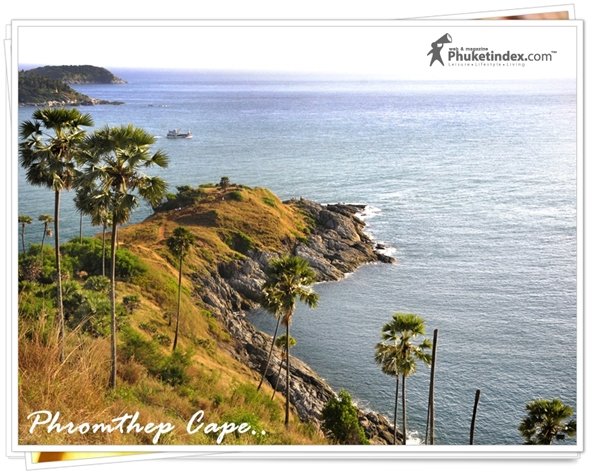
This is probably Phukets most photographed and perhaps best-known location, Phromthep Cape.
Many people, both local and tourists, come to see possibly the most spectacular sunset Phuket has to offer.
There is also a lighthouse here which provides spectacular views over the east and south-east of the island and its environs.
Phromthep Cape also houses an Elephant Shrine which is a shrine to the Hindu god Brahma that is surrounded by thousands of wooden elephants of every size. It’s all meticulously taken care of and the arrangement is photogenic, colourful and impressive.
 Release Date: May 5, 2011
Studio: Universal Pictures
Director: Justin Lin
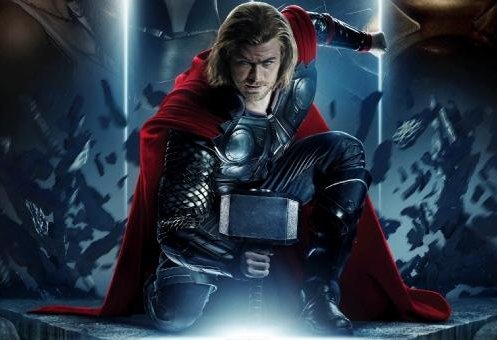 Release Date: April 28, 2011 (3D/2D)
Studio: Paramount Pictures, Marvel Studios
Director: Kenneth Branagh
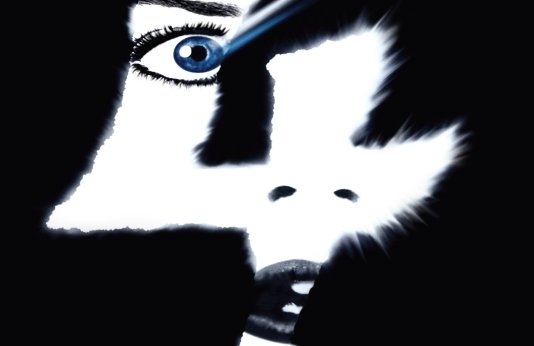 Release Date: April 21, 2011
Studio: Dimension Films (The Weinstein Company)
 Release Date: April 14, 2011
Studio: Columbia Pictures (Sony)
Director: Jonathan Liebesman
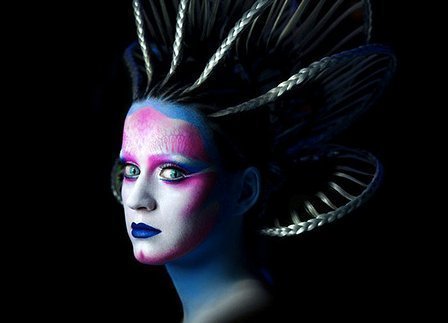
 Now Katy Perry’s music video for “E.T.” has been released. She and Kanye take us to a whole new dimension up in this piece.
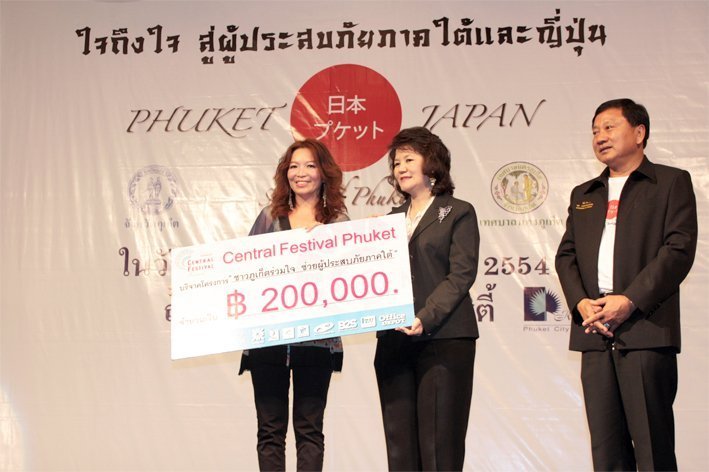
Central Festival Phuket joined and donated 200,000 Baht with the fundraising event
“Hearts to Hearts for Japan and Southern Part of Thailand Charity Acitivity 9-10 April 2011”
 Earthquakes

 RSS - Posts