


 English
 Thai
Thai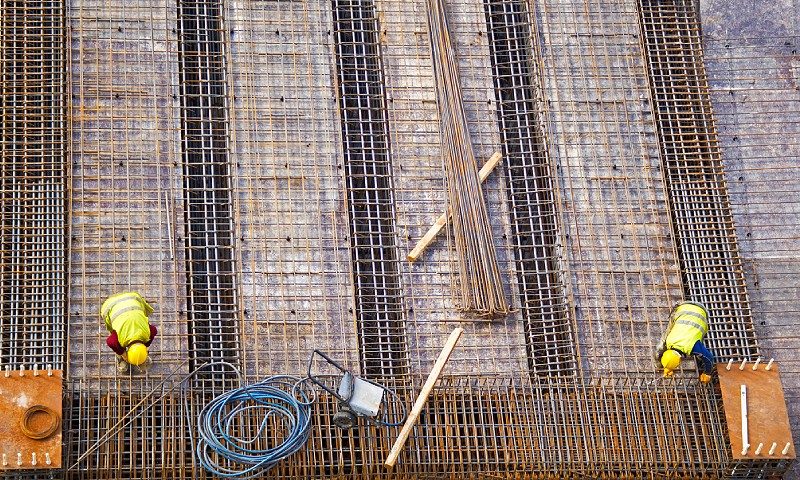
The skyline of modern cities is a testament to the rapid advancement of structural engineering. As buildings grow taller and infrastructure becomes more complex, the methods we use to reinforce these structures must evolve. Traditionally, the “lap splice” method, overlapping two pieces of rebar and tying them with wire, was the industry standard. However, as design requirements become more demanding and safety regulations more stringent, the limitations of lapping have become evident to engineers worldwide.
Today, high-performance projects demand a more reliable, consistent, and verifiable connection. This is where Dextra’s mechanical rebar couplers have transformed the landscape of the construction industry. By providing a direct “end-to-end” mechanical connection, these couplers eliminate the dependency on concrete bonding for load transfer, ensuring a continuous path for structural forces. This shift isn’t just about raw strength; it’s about optimizing the entire construction lifecycle, from the drawing board to the final inspection.
Solving the Problem of Rebar Congestion
One of the most significant challenges in modern reinforced concrete design is rebar congestion. In high-seismic zones or heavily loaded columns of high-rise buildings, the amount of steel required can be immense. When using traditional lap splices, the amount of steel in a single cross-section effectively doubles at the splice location because two bars must run parallel to one another for a specific length.
This congestion creates a “honeycomb” effect during the pouring process. When bars are packed too tightly, the coarse aggregate in the concrete cannot flow freely between them. This leads to air pockets, voids, and structural weaknesses that are often hidden from view. Mechanical couplers solve this by maintaining a slim, streamlined profile. By connecting bars end-to-end, you maintain the same steel-to-concrete ratio throughout the column or beam, allowing for better concrete consolidation and a much higher quality finished product.
Superior Structural Integrity and Load Transfer
In a traditional lap splice, the transfer of force depends entirely on the “bond” between the steel and the surrounding concrete. If the concrete fails, cracks, or loses its integrity due to environmental factors, the splice fails. This makes the concrete the weakest link in the chain. Mechanical couplers, however, create a “mechanical” link that acts as a single continuous bar, independent of the concrete’s condition.
Modern couplers are designed to be “Bar Break” systems. This means the mechanical connection is engineered to be stronger than the reinforcement bar itself. Under extreme tension or seismic loading, the steel bar will yield or break before the coupler yields. This provides a level of structural safety and predictability that traditional lapping simply cannot match, making it the preferred choice for critical infrastructure such as bridges, nuclear power plants, and high-rise residential towers.
Accelerating Construction Timelines
In the construction world, time is the most expensive variable. Traditional lapping requires meticulous measurement of lap lengths, which vary significantly based on the concrete grade, bar size, and even the position of the bar within the structure. This adds layers of complexity to site labor and increases the margin for human error.
Using mechanical systems streamlines the entire onsite process. Prefabricated threaded bars can be quickly and easily screwed into couplers, significantly reducing the man-hours required for cage assembly. In many modern projects, using couplers allows for the pre-assembly of large rebar cages off-site or on the ground in a controlled environment. These cages are then lifted into place and connected in minutes. This “plug-and-play” approach can shave weeks off a project’s critical path, leading to massive savings in overhead and financing costs.
Cost-Effectiveness through Material Savings
At first glance, a mechanical coupler carries a higher unit price than a simple piece of tie wire. However, a holistic view of the project budget reveals significant long-term savings. Lap splicing essentially “wastes” a considerable amount of steel, sometimes up to 2 to 3 meters of rebar per connection on large-diameter bars.
When you multiply this waste across a 40-story building or a multi-kilometer bridge, the tonnage of “lost” steel is staggering. By using couplers, you eliminate this wasted overlap entirely. Furthermore, by reducing the bar diameter needed (because the connection is more efficient and creates less congestion), developers can reduce total steel weight, lower shipping costs, and decrease the overall carbon footprint of the project.
Enhancing Seismic Resilience and Ductility
For regions prone to earthquakes, the ductility of a structure, its ability to deform without collapsing, is a matter of life and death. During a seismic event, structural members undergo intense cycles of tension and compression.
Lap splices are notoriously weak under cyclic loading. As the concrete cover begins to spall (flake away) during a quake, the lap loses its grip and the structure’s integrity vanishes. Mechanical couplers are specifically engineered to handle these plastic deformations. They ensure that the reinforcement remains intact even when the surrounding concrete is severely stressed or damaged, providing the necessary ductility to keep buildings standing and allow for safe evacuation during tremors.
Simplifying Design, Expansion, and Inspection
From an architectural and engineering standpoint, couplers offer incredible design flexibility that lapping cannot provide. They allow for “future-proofing” a structure; for example, leaving threaded couplers flush with a concrete wall allows for easy expansion or the addition of new wings at a later date without the need to chip away cured concrete to find lap bars.
For site inspectors and quality control managers, verifying a mechanical connection is far simpler and more objective than measuring various lap lengths across a messy site. Many modern systems come with visual indicators, such as color-coded threads or specific torque requirements, that make Quality Assurance (QA) a streamlined process. This reduces the risk of human error and ensures that the “as-built” structure perfectly matches the “as-designed” blueprints.
Sustainability and the “Green” Building Movement
The construction industry is under increasing global pressure to reduce its environmental impact. Steel production is one of the most energy-intensive processes in the world. By eliminating the 10% to 15% of steel typically wasted in lap splices, projects significantly reduce their embodied carbon.
Additionally, thinner columns and beams (made possible by reducing rebar congestion) mean less concrete is required overall. This creates a ripple effect: less steel to manufacture, less concrete to mix, and fewer heavy trucks on the road for transport. This makes mechanical splicing a key component of “Green Building” initiatives and LEED certifications, proving that the more technically advanced solution is often the more environmentally friendly one.
Conclusion
The transition from traditional lapping to mechanical splicing is no longer just a luxury reserved for specialized engineering feats; it has become a necessity for modern efficiency, safety, and urban density. As we continue to push the boundaries of what is possible in concrete construction, the reliability of our internal connections must be absolute.
Dextra has been at the forefront of this industrial transition for decades, providing high-quality solutions that meet and exceed the most stringent international building codes. By integrating Dextra’s mechanical rebar couplers into your next project, you aren’t just buying a component; you are investing in the structural integrity, speed, and long-term sustainability of a building designed to last for generations. Whether you are building a luxury resort in Phuket or a commercial skyscraper in Bangkok, the move toward couplers is a move toward a smarter, safer future.
source: Search Studio
picture: Search Studio / https://www.freepik.com/free-photo/workers-putting-metal-structure-construction_1006549.htm#fromView=search&page=1&position=2&uuid=865da412-8e5a-4abf-9fbc-2b34093a6ba1&query=Rebar+Couplers

